The Role of Optometrists in Global Vision Health
- LivingHope Vision Clinic

- Mar 24
- 2 min read
Learn how optometrists improve global vision health through early detection, preventive care, and advanced technology helping prevent vision loss worldwide.
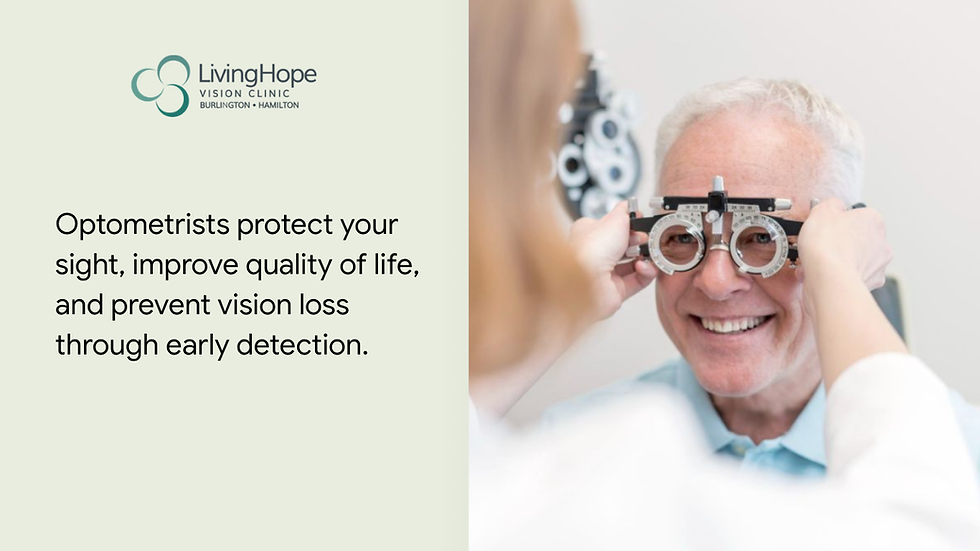
Vision care is a global public health priority. Millions of people worldwide live with preventable or treatable vision impairment, and access to proper eye care is critical. Optometrists play a vital role in protecting sight, improving quality of life, and reducing avoidable blindness through comprehensive eye care and early detection.
A Global Vision Challenge
Globally, vision impairment affects billions, with uncorrected refractive errors and cataracts among the leading causes. Many cases go untreated due to limited access to eye care, lack of awareness, or delayed diagnosis. Optometrists help close this gap by providing primary eye care, early detection, and vision correction, significantly reducing the burden of visual impairment.
Optometrists as Frontline Eye Care Providers
Optometrists are often the first point of contact in the eye health care system. As primary eye care providers, their role extends far beyond prescribing glasses and contact lenses. They are trained to:
Detect and manage refractive errors such as myopia(nearsightedness), hyperopia and astigmatism
Identify early signs of eye diseases such as glaucoma, diabetic retinopathy, and macular degeneration
Provide comprehensive eye exams and preventive vision care for children and adults
Refer patients for advanced treatment when necessary
This frontline role is especially critical with limited access to ophthalmology services.
Preventing Vision Loss Through Early Detection
Many serious eye conditions develop silently, without noticeable symptoms in the early stages. Regular eye exams allow optometrists to detect problems early when treatment is most effective. Early intervention can prevent permanent vision loss and reduce long-term healthcare costs globally.
Vision Care and Overall Health
Eye exams often reveal more than vision problems. Optometrists can detect early signs of systemic conditions such as diabetes, high blood pressure, and neurological disorders, making optometry an essential part of integrated healthcare worldwide.
Advancing Global Vision Through Technology and Innovation
Modern optometry is evolving rapidly. Advances in digital retinal imaging, optical coherence tomography (OCT), wide-field retinal imaging, corneal topography, specialty contact lenses, and tele-optometry are expanding access to comprehensive eye care, even in remote or underserved areas.
Additional technologies such as OCT angiography (OCTA), anterior segment imaging, meibography for dry eye assessment, and automated visual field testing allow for earlier detection and more precise monitoring of conditions like glaucoma, macular degeneration, diabetic retinopathy, and corneal disease.
Education is a powerful tool in global vision health. Optometrists raise awareness about the importance of regular eye exams, eye safety, and early treatment, empowering individuals and communities to take charge of their eye health.
Take Action: Protect Your Vision
Global vision health begins with individual care. Prioritizing your eye health helps reduce preventable vision loss, one patient at a time.
👉 Book your comprehensive eye exam at Living Hope Vision Clinic - Burlington & Hamilton today, where experienced optometrists, advanced technology, and compassionate care work together to protect your vision and support lifelong eye health. 👁️✨


Comments