What Happens to the Brain During a Concussion? Your Eyes Can Reveal More Than You Think

Have you ever bumped your head and thought,
"I'm okay. It's just a headache."
Many people do.
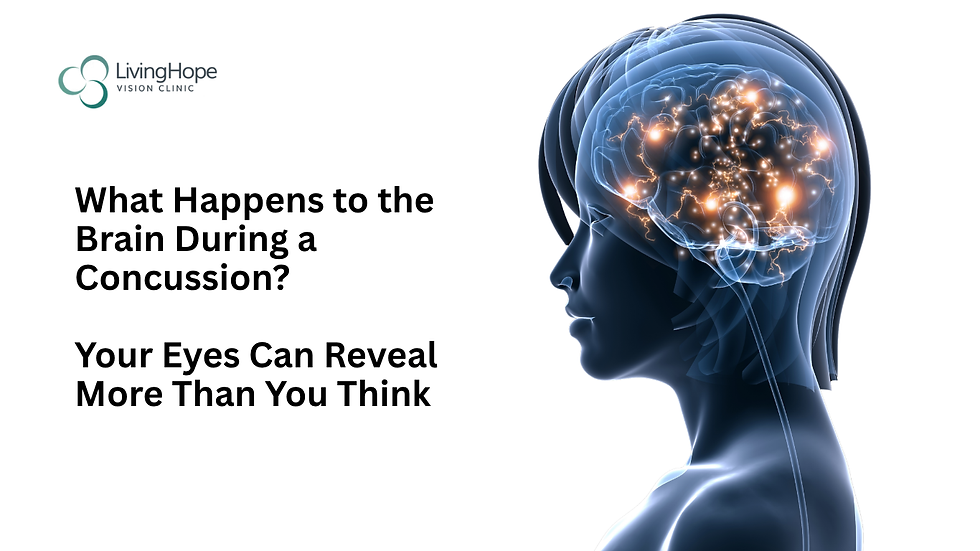
Whether it's from a sports injury, a fall, a car accident, or simply hitting your head on a cabinet door, concussions are more common than most people realize. In fact, some people don't even realize they've had one.
While headaches and dizziness are well-known symptoms, what many people don't know is that your eyes can provide important clues that your brain is still healing.
Because nearly half of the brain is involved in processing vision, even a mild concussion can affect how your eyes work together, track movement, focus, and process what you see.
If you've noticed blurred vision, trouble reading, light sensitivity, or eye strain after a concussion, your eyes may not be the primary problem; the brain's visual processing system can be struggling to process visual information.
What Is a Concussion?
A mild traumatic brain injury (mTBI) occurs when the brain moves rapidly inside the skull after a sudden impact or force.
This movement causes the brain to stretch and twist, disrupting normal communication between brain cells.
Unlike a broken bone, a concussion often doesn't appear on regular X-rays and may not appear on CT scans, yet it can still affect how the brain functions.
Common causes include:
Sports injuries
Falls
Motor vehicle accidents
Workplace accidents
Bicycle accidents
Physical assaults
Even a seemingly minor hit to the head can cause a concussion.
What Actually Happens Inside the Brain?
Imagine holding a bowl of soft gelatin.Now shake the bowl suddenly. The gelatin doesn't stay perfectly still; it moves, stretches, and bounces against the sides.Your brain behaves similarly inside your skull during a concussion.
The sudden movement can temporarily disrupt:
Communication between brain cells
Blood flow
Chemical balance
Energy production
Information processing
The brain immediately works hard to repair itself, but during this healing period, changes in energy use and blood flow can contribute to concussion symptoms.
This mismatch helps explain why many people experience symptoms such as:
Headaches
Fatigue
Brain fog
Difficulty concentrating
Memory problems
Dizziness
Balance issues
Light sensitivity
Why Does a Concussion Affect Vision?
Approximately 50% of the brain is dedicated to vision and visual processing. Seeing isn't just about your eyes.Your eyes collect information, but your brain interprets everything you see. After a concussion, communication between the eyes and brain can become disrupted. As a result, everyday tasks can suddenly become exhausting.
For example:
Reading a book
Working on a computer
Driving
Shopping in a busy grocery store
Watching moving objects
These activities require dozens of brain areas to work together. After a concussion, those systems can work less efficiently.
Common Vision Problems After a Concussion
Not everyone experiences the same symptoms. Some appear immediately. Others develop days or even weeks later.
Common symptoms include:
Blurred vision Words may appear fuzzy, especially when reading.
Double vision Objects may appear duplicated because the eyes are no longer perfectly aligned.
Light sensitivityBright sunlight, computer screens, or fluorescent lights can become uncomfortable.
Difficulty focusingSwitching focus between near and distant objects can become slower.
Eye fatigueYour eyes can tire quickly, especially after reading or screen time.
Trouble tracking moving objectsFollowing a moving ball, driving, or watching television can feel difficult.
Poor depth perceptionJudging distances can become harder.
Headaches during visual tasksMany concussion-related headaches occur because the visual system is working harder than normal.
Signs You Shouldn't Ignore
Contact an eye care professional if you experience:
Blurred vision that doesn't improve
Double vision
Persistent headaches
Difficulty reading
Increased sensitivity to light
Motion sickness while driving
Poor concentration
Trouble balancing
Eye strain after short periods of screen use
These symptoms can indicate lingering visual dysfunction following a concussion.
How Can an Eye Exam Help?
Many people assume they only need to see their family doctor after a concussion.
While medical evaluation is essential, an eye examination can identify visual problems that may otherwise go unnoticed.
These findings can help explain symptoms that standard vision screenings may miss.
Can Vision Recover After a Concussion?
In many cases, YES. Every concussion is different. Some people recover within weeks, while others experience symptoms for months.
Early recognition is important because untreated visual problems can interfere with:
School
Work
Sports
Driving
Daily activities
A personalized management plan can include:
Visual rehabilitation strategies
Temporary lens and custom tint recommendations
Workplace or school accommodations
Ongoing monitoring
Collaboration with your healthcare team
Who Is Most at Risk?
Anyone can experience a concussion, but it's especially common among:
Athletes
Children and teenagers
Seniors
Construction workers
Drivers involved in collisions
Individuals with previous history of concussions
If you've experienced a head injury and notice vision changes, don't assume they will simply disappear.
When Should You Book an Eye Exam?
Schedule an eye examination if you've experienced a concussion and have:
Blurred vision
Double vision
Eye strain
Difficulty reading
Persistent headaches
Dizziness triggered by visual tasks
Sensitivity to light
Trouble concentrating
Even if your symptoms seem mild, a comprehensive evaluation can help identify vision-related issues that can affect your recovery.
Frequently Asked Questions
1. Can you have a concussion without losing consciousness? Yes. Most concussions do not involve loss of consciousness.
2. Can a concussion cause vision problems? Yes. Most improve with proper care, but some symptoms can persist.
3. Why do my eyes hurt after a concussion? A concussion can affect visual processing, causing eye strain and headaches.
4. Can an eye exam detect concussion-related vision problems? Yes. A comprehensive eye exam and neuro-optometric assessment can identify visual problems.
5. How long do vision problems last? Recovery varies. Some improve within weeks, while others need longer care. Persistent vision symptoms should be evaluated.
Vision and the brain are closely connected, so recognizing changes early can play an important role in your recovery.
Book Your Comprehensive Eye Exam Today
If you've experienced a concussion or are noticing changes in your vision after a head injury, our team can assess your visual system and determine whether a Comprehensive Eye Exam or Neuro-Optometric Assessment is appropriate for your needs.
Book your appointment with LivingHope Vision Clinic today and take an important step toward supporting your recovery and protecting your vision.


Comments